
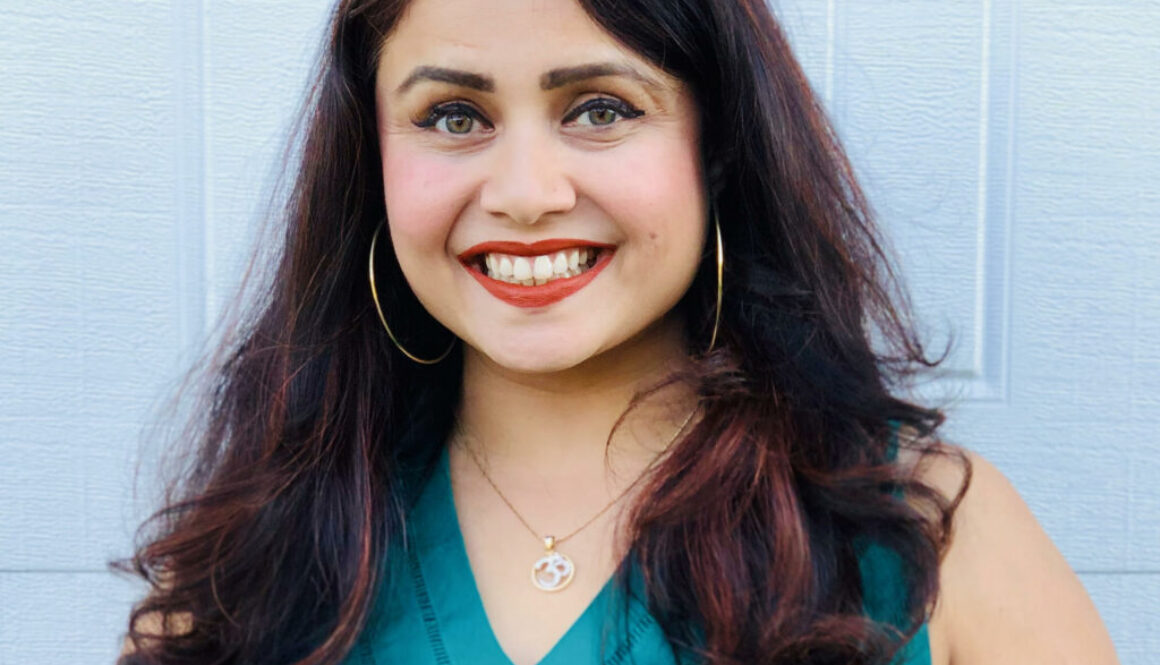
Autism acceptance: A Heart to Heart chat

 To increase autism acceptance in our community, I spoke with some mothers of neurodivergent children to bring to you their stories: their journeys, their joys, their sorrows and their struggles of raising a child on the spectrum.
I am sincerely thankful to Anuradha Palakurthi, Poppy Charnalia, Meghashree Das and Mamata Nanda for their time and candid responses.
Here are excerpts from my conversation with them.
Yogita: What are some of the most challenging aspects of being a parent of a child on the autistic spectrum?
The first thing was acceptance for almost everyone. Even when they suspected their child was different, the formal diagnosis was the hardest part. The next step is the complete reappraisal of what is important in life. And one of biggest concerns is planning for the future of the child, and the daunting thought of what will happen after the parents? Suddenly the unpredictability of everything weighs you down. Poppy says that it took her years to move out of the depression and grief she experienced, but she helped herself with better food, music, art, running and above all the love of her family.
Yogita: What is your proudest or the happiest moment in raising your child?
One of the moms said that when their son learned how to ride a bicycle without training wheels, all in a day, and went around the neighborhood by himself and returned smiling was the happiest moment for her.
Yogita: What has been the most rewarding aspect?
Anuradha says that the way having a sibling on the spectrum changed her other children was priceless. She sees them have greater empathy, and becoming better humans and leaders in life. Poppy says that seeing her innocent and lovable son taught her that life has to be lived fully, to make happiness a habit, not wasting time on getting upset and loving your child unconditionally is pure bliss, and only the fortunate can understand and experience that.
Yogita: Tell us about the most underrated experience that parents of a neurotypical child cannot relate to?
“As parents of special needs kid, we understand that rules, social or otherwise, schedules etc. don’t matter. The world has to become more accommodating for children on the spectrum. For starters, I would love if people wouldn’t stare at my son because he always blocks his ears!” says Poppy. Finding a babysitter is a mammoth of a task. Adults are programmed to see children behave in a certain way, and anything different doesn’t go down well with them. Another mother said that for a parent of a neurotypical kid, the child doing something on their own is not a big deal but for me it is something to be giddy about. Megha in her words told me “Like holding his pencil, brushing his teeth, potty training, and such achievements and accomplishments gave me and my husband so much joy, we know cannot take anything for granted.”
Yogita: How has being a special needs parent changed your perspective towards the world?
One mother said that she was a bit old-schooled and did not realize just how much one’s mental and emotional stability has an impact on their physical being until her child came in her life. Another mom Mamata said that she now realizes that being kind, empathetic, helpful and nonjudgmental are the most important qualities any human being should possess. Megha said that she now sees herself helping other parents like her. She feels she has a purpose to her life. She and her husband have made it a point to be healthier, and all their actions have an intent.
Yogita: What are your thoughts on how autism is portrayed in the media? And the impact of that?
All mothers agreed that the media is mostly very supportive. Anuradha says “the positive news is that as humans, we have become more open and understanding.” “Autism is now being spoken about in a better light. It’s a lifelong challenge so saying that it can be cured is not always the right approach. The brain of a person on the autism spectrum is just differently wired. Some great artists and scientist were on the spectrum. Those brains gave incredible gifts to humankind. In fact, I think all creative people are somewhere on the spectrum, that’s why they Create and don’t follow what’s already been done,” Poppy chimed in.
Yogita: Where have you found support?
All the women concurred that their families and some close friends have been their biggest support system. Mamata says that meeting families with special needs children has been the most uplifting and positive thing for her. Anuradha says that Prashanth has been her absolute rock at every stage of this journey. Poppy added that the school has been incredibly supportive, and that they have achieved so much by partnering with them in all developmental areas.
Yogita: Share your experience with the school system
All three mothers, Anuradha, Poppy and Mamata, agreed that the school system has been excellent. They are very pleased with the attention, commitment, knowledge, support, services and compassion they receive from the teachers. Poppy says that her respect towards teachers is tremendous and they have achieved what doctors couldn’t for her son: a space where not only her son but they also feel comfortable, understood and welcome; and their suggestions and ideas are heard.
Yogita: What advice would you give for nurturing a marriage when you have a special needs child?
All the women said that it is key for the couple to make time for themselves, to plan their life more, to focus on what is more important and to accept the restrictions that a couple with neurotypical child may not have. The basis of the marriage is love and as long as that is there, nothing will change. “It is our child. It is our responsibility. We don’t get to choose all events and all people we want to be with. Accept that. And share the outcomes as best as we can,” said Anuradha. Poppy focussed on the importance of being equal partners with her husband, and continue the journey through laughter when things seem to get tough. She added, “take turns to do things, give each other breathing space. I call it strategic parenting not reactive.” Mamata added that it is key to help and support each other constantly. Megha says one of the vital things to keep in mind is to not play the blame game, it won’t do anyone any good.
Yogita: In your opinion and experience, what is the biggest misconception people have about autism?
“That it is fixed. It is not. It is a spectrum. Most individuals on it are very, very intelligent. It has little to do with IQ,” said Anuradha. Another mother I spoke to agrees with this and added that we all need to remember that just like no two neurotypical people are same, no two children on the spectrum are same. Poppy wants people to know that the assumption that children on the spectrum are violent is completely incorrect. Mamata added that autism is not a disease, it is a lifelong condition.
Megha says that the society needs to understand that not all autistic children are going to be like Einstein. She wants people to know that a child on the spectrum can play if given time and the right environment, you just need to work with them. She wants to remind people that having an autistic child has nothing to do with living in the US. And she wants to urge people to stop believing that everything will be “normal” eventually.
Yogita: What are some of the things that people don’t realize is offensive or inappropriate but has personally affected/hurt you?
Pity and facile counsel are the biggest ones as per Anuradha. She understands that usually it is well-intentioned, and thus doesn’t affect her but wants people to realize that parents know what they are dealing with and aren’t looking for counsel from non-specialists. Another mother said the same and wants people to know that in most cases she has already tried the advice that others are giving and often it hasn’t worked out for her child.
Yogita: Do you feel socially isolated and if so, how do you combat that?
Different mothers had a different say on this. While some do feel socially isolated and to combat they have to choose their friends wisely, others had found a solid support system in their friends from before.
Yogita: What do you wish you could tell others, but don’t usually get the chance?
“Just leave space to an autistic child. Don’t crowd them – even in well intentioned. Always acknowledge their presence by saying a hello or any greeting. You’re lucky if you get a reply.”
“A parent whose child has any cognitive or other challenge has a different perception of what pain is and what joy is. You learn to live life deeply and meaningfully. Rules, rigidity of any process, schedules, social structures, social hierarchies, social facades – they all simply cease to have any meaning.”
“There are good days and bad days. Do not let the bad days get heavy on you. Even if it might not feel like it, remember in that moment you are doing the best you can for your child. Do not blame yourself.”
“I wish I can tell people to give nonjudgmental acceptance to my family all the time, every time.”
Yogita: How can medical care providers be most supportive of special needs parents?
“By giving a comfortable environment, seeing patients as per their appointments with no wait time, listening first and then diagnosing and starting the treatment promptly. Also giving parents some counseling service will be very helpful.”
“I want to tell doctors that they are not always right. I know my child much better than any doctor. I am also more motivated than any primary care doctor to follow research being conducted worldwide in this field. They have to partner with parents in treatment strategies and not follow rules and methods that work with neuro-typical kids. Please look at my child’s health and behavior holistically.”
Yogita: What can the community do to support a family of a special needs child?
Poppy wants to remind everyone that a family with a special needs child is constantly on alert for the safety of their child, constantly parenting with no vacations or breaks. Please be kind to and accommodating of them. Remember rules and schedules don’t work in our family.
Anuradha wants you to be just yourself.
Another mother wishes that there be more accommodations for her child in public places. In addition, there should be more subsidies, better health insurance plans for the family and life insurance policies supported by the government where the direct beneficiary is the child. And please don’t stare at my child in public.
Mamata and Megha both said that they wish the community would just be more accepting of their child, and treat them like you would treat any other child.
Megha wants to remind you that she and her husband like to be treated as individuals, and not always the parents of an autistic child. And if you really want to do something, then please invite me or cook for me or just come with me to the playground. I crave for normal social interaction just like you. Just remember that “HEARING ABOUT AUTISM, READING ABOUT AUTISM AND LIVING WITH AUTISM IS TOTALLY DIFFERENT.”
–Yogita Miharia (for IAGB)


 Filling up my cup relates to creating a white space for oneself to do what one feels important and excited about. The last many months have posed innumerable challenges to every one of us, personally and professionally. Several blogs have come out from many, and a recent study by Mintel points to a lot more at-home personal routines for physical and mental well-being.
 As I began to write about our life, mine, my son’s, our family’s it turned out to be about more than just us. It became a story of everyone around us and about the community we live in.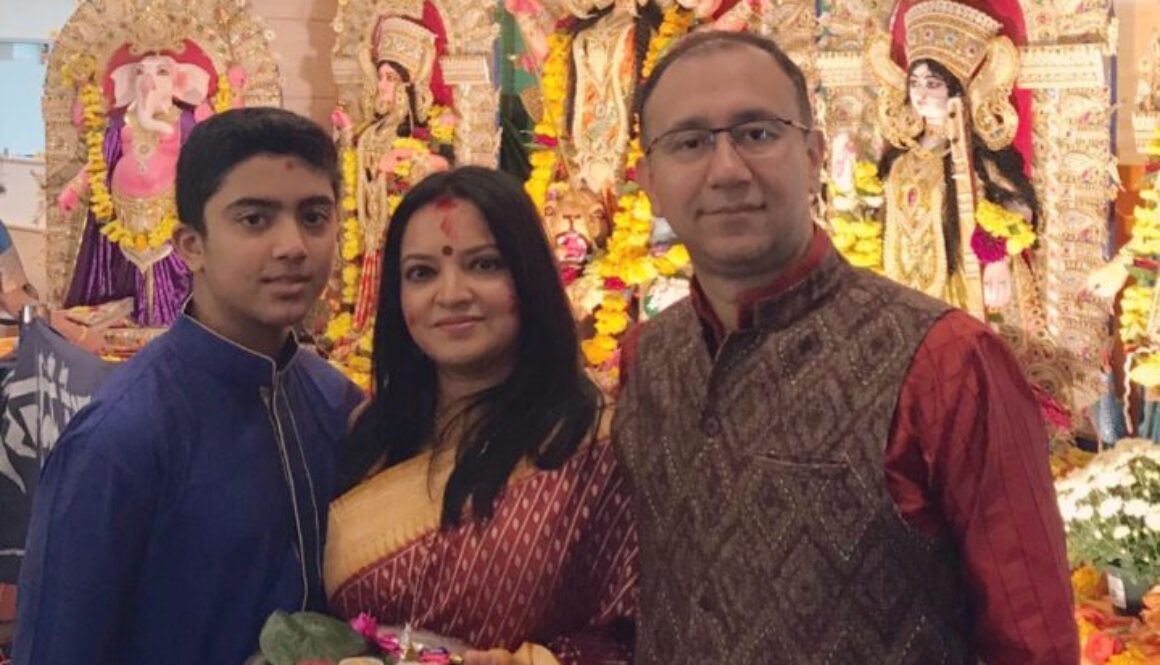
 When the drumbeats were heard, the smell of sweet fragrance of Harsingar, or ‘Shiuli’ as we call it in Bengali, was in the air, open fields were surrounded by Kash phool (Kans grass) and my mind used to be overjoyed as all these used to bring the joyous message that – Durga Maa is coming home! That was around so many years ago… my growing up years in Calcutta or rather Kolkata! Durga Puja then was all about garnering a shot of freedom, of carefree behavior, every single year.
  Nothing can compare to Durga Puja celebrations in Kolkata. The ‘City of Joy’ does not sleep, and its people enjoy the revelry to the hilt! Its five days of celebrations with themed pandals and traditional pujas, food, friendship and creativity. This part of the country seems illuminated from the sky as the city is bathed in lights. This is the way of life for Kolkata residents, and one must visit Kolkata during Puja to experience it firsthand.
  Though the celebrations around Durga Puja last for over four days, mainly from Saptami to Dashami, the mood of the Durga Puja sets in much earlier in the life of the people of Bengal. It starts with the idol making at Kumartuli, a place famous for its beautiful clay idols of Gods and Goddesses and pottery. The entire process of creation of the idols or ‘murti’, as it is commonly known as from the collection of clay to the ornamentation, is a holy process and supervised by rites and other rituals.
 Durga Puja evenings are incomplete if adults and kids do not take the floor to dance to the rhythmic beats of dhak and bells, holding earthen pots billowing a fragrant smoke. This impromptu dance is called ‘Dhunuchi naach’, a prominent custom and the most awaited activity after the evening Durga Aarti. Smoke, sound and rhythmic swaying creates an ambience which is purely intense and intoxicating! The Joie De Vivre seen in Kolkata during Puja days has been compared to the famous Carnival in Rio de Janeiro. The carnival spirit is more evident on the last day of Durga Puja (the day India celebrates Dussehra) when the idols are taken out in a procession for immersion in the river Ganges midst cacophony of Dhaak, dhunuchi naach and the chants of ‘Balo Durga mai ki jai’. The final day of celebration is incomplete without the famous ‘Sindoor Khela’, which has become such an important part of the cultural identity of Bengal. Women draped in quintessential red and white saree apply sindoor to each other and offer sweets.
  It has always been amazing to see how craftsmen shape the fantastic pandals (temporary marquees housing for Maa Durga and family) with bamboo, canvas and colored cloth; there is no construction, imaginary or real, that they cannot give shape to. Kolkata literally turns into a virtual walk-through gallery! The magnificent structures of the pandals and commendable artwork allows you to get a hint of Bengali tradition. These pandals justify why Durga Puja is a profligate affair in Kolkata! What is Durga Puja sans pandal hopping, right? Pandal hopping by night is a special attraction because of the massive illuminations. The vast canvas of the themes that are showcased in these pandals are just unparalleled and must have to be seen to be believed.
 Hopping from one pandal to another, by day or by night, does make you feel hungry. This is the time to check out the street food. A nibble here, a bite there and you are good to go! Two of the fastest moving foods on Kolkata streets are the ‘roll’ and ‘momo’. The roll, Kolkata’s equivalent of a ‘wrap’ or a ‘Frankie’ is essentially a paratha wrapped around a filling of cooked egg or chicken or mutton kebab, with some onion and green bell pepper, chopped chilies and a dash of lime, and an optional smearing of tomato ketchup or chili sauce. The momo, or the Tibetan version of the dumpling, has been Kolkata-ised too, with fillings of chicken and mutton replacing pork. Do not worry if you are a vegetarian, they have options to satisfy your cravings. Other popular items sold off the cart are dosas and a very ‘desi’ version of stir-fried noodles or ‘chow mein’. And of course, how can there be pandal hopping without a puchka refuel! At every corner, you will find the ubiquitous puchka-seller, the jhaalmuri-wala and bhel-wala. The ‘puchka’ is Bengal’s version of the ‘golgappa’ or the ‘panipuri’. And I must have to mention the famous Bengali desserts like Mishti Doi, Sondesh and Rassogolla’s sweeten the celebrations across the city.
 A beautiful gathering of family and friends is another highlight of the Durga Puja fervor. Festivals bring people and families closer. Likewise, during Durga Puja, Bengali’s spend time with their near and dear ones through long adda(chat) sessions at various Puja Mandaps. I have been celebrating Durga puja with my family and friends in Boston for almost two decades now. Durga Puja in Boston may not match the grandeur of Kolkata, but it surely helps rekindle some of the nostalgic moments from my childhood days!